The World’s Best Chilean Wines of 2026
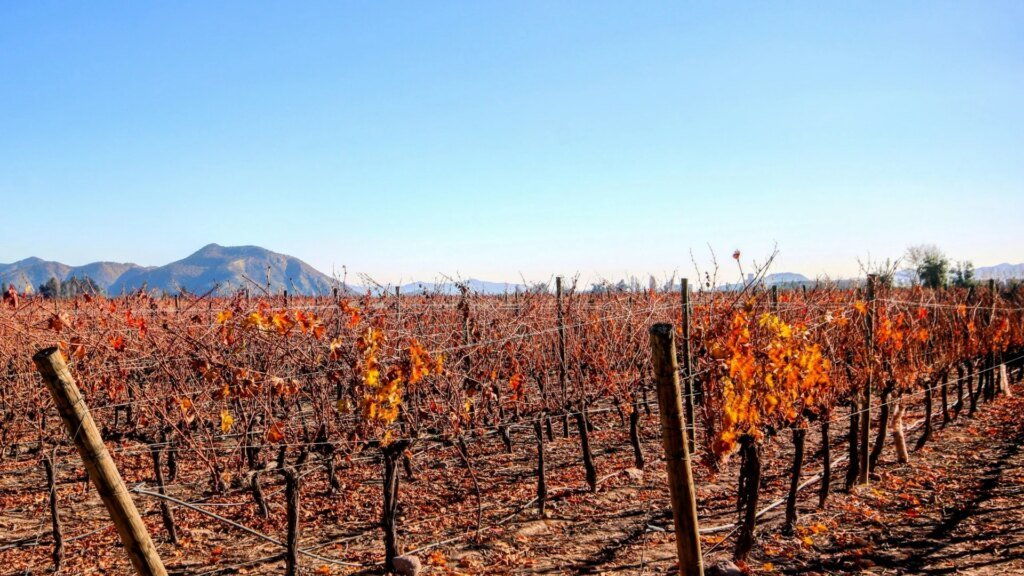
Chile’s finest WINES not only showcase the country’s excellent winemaking, but demonstrate great value too.
The long thin slip of Chile makes for one of the most diverse winemaking countries in the world – and one of the best value.
From the extremely arid Atacama desert moving south to the semi-arid Coquimbo and the warm Mediterranean valleys of Aconcagua and cool coastal Casablanca and the Central valleys of Maipo, Cachapoal, Colchagua, Curicó and Maule to the wilder wetter vineyards of Itata and Bío Bío, Chile can and does deliver it all.
Unlike its neighbor on the other side of the Andes which champions Malbec above all, Chile’s offerings are comparatively diverse, although red still very much remains the order of the day.
Another interesting note worth mentioning is the diversity of both the regions and producers that made this list. Unlike last week’s best Argentinian wines which was almost entirely Malbec and largely dominated by two winemaking families, Chile has no such monopoly, duopoly or otherwise, as we shall see.
However, before we dig into this year’s list, it’s worth recapping some house rules. Number one is the price – all prices listed are the global average retail price – or GARP – ex-tax in US dollars. They are also all listed at the time of writing, and may subsequently shuffle.
Number two is the score; all scores are aggregated from our pool of critics with each critic weighted according to their reputation.
As critics are weighted according to their reputation and rarely will every wine be tasted by the exact same pool or number of critics, the resulting scores might not appear on the surface to follow a linear order.
Depending on how many critics rate each wine and the scores they give, the ranking of this list may look slightly odd. However, in a nutshell, a wine with a score of 97 points might only have received those accolades from two critics while another with 94 points might have been scored by five.
Therefore, a wine with a score of 94 points from five critics might carry more weight – be ranked higher – than one scored 97 but from only two critics, particularly if the critics themselves carry less weight.
So don’t be surprised if a wine appears to leapfrog another in score.
Still confused? Just trust us on this one.
Number one is one of Chile’s most recognizable wines, the Viñedo Chadwick in the Maipo Valley. It is the flagship wine of the Viñedos Chadwick group and is a single-vineyard Cabernet Sauvignon with just the tiniest dash of Petit Verdot.
The wine pays tribute to Don Alfonso Chadwick who originally purchased the estate in 1942 as somewhere to pay polo. It was his son, Eduardo, who drove the move into viticulture.
In 1999, Viñedo Chadwick was released to great acclaim and today, the wine has a critic score of 96 points, and a price point of $332.
Number two is Seña, a joint venture between the aforementioned Eduardo and Robert Mondavi who first embarked on this project back in 1995. Their vision was to create a wine that truly showcased the unique cool high-altitude terroirs of Chile with all the finesse of a Bordeaux-style wine, and so Seña was born.
A biodynamically produced blend of Cabernet Sauvignon, Carménère, Petit Verdot, Merlot and Cabernet Franc, Seña continues to rival the best of Bordeaux and the Super Tuscans. With a critic score of 95 points, the wine comes in at $128.
Number three is the Don Melchor Cabernet Sauvignon owned by Chilean powerhouse Concha y Toro. Named after the founder of Concha y Toro, Melchor was a Chilean businessman who brought Bordeaux cuttings back to Chile in the 1880s and helped kickstart the country’s viticultural production.
Since the wine’s first release in 1987, it has become a consistent hit with the critics, scoring 95 points with an average price point of $156.
Four is the Clos Apalta, a premium brand from the Colchagua Valley. Produced by the Casa Lapostolle winery which was founded in 1994 by Alexandra Marnier Lapostolle – of the French Grand Marnier family – and her husband, Cyril de Bournet.
The winery, itself, was designed to fully embrace a New World identity – modern and forward-thinking – the building itself mimics the staves of a barrel.
The wine itself is a Bordeaux blend of Merlot, Carménère and Cabernet Sauvignon with the odd splash of Cabernet Franc and Petit Verdot. First released in 1997, the wine has since received rampant praise and has a critic score of 94 points, with an average price point of $136.

Five is the Viña Almaviva by Almaviva, a joint passion project between Baron Philippe de Rothschild of Bordeaux and Concha y Toro, who released the first vintage in 1996.
Initially created as a South American answer to the great reds of the Médoc and Napa Valley – the presence of Carménère in the blend adding something uniquely Chilean – Viña Almaviva is now traded on the Place de Bordeaux.
Today, it has a critic score of 95 points, and an average price point of $171.
Six is the first of the whites to appear on this list with the Selección de Parcelas Los Primos Chardonnay by Baettig. Nestled in the Malleco Valley, Baettig is the joint venture between friends Francisco Baettig and Carlos de Carlos who both worked at that other great Chilean estate, Viñedos Familia Chadwick.
After planting their first vines in 2013, they released Los Primos Chardonnay seven years later in 2020. Since then, Los Primos has garnered 95 points from the critics at a price point of $79.
Seven is the Espíritu de Apalta Limited Edition Malbec by Neyen Winery in the Colchagua Valley.
The original winery was built in 1890 and has since been modernized. It is also home to some of Chile’s oldest Cabernet Sauvignon vines dating from 1889.
Painstakingly restored by the Rojas family – Neyen means “spirit” – the family has built a strong reputation for premium reds; the Espíritu de Apalta Limited Edition Malbec is one such red. Made from very old vines, the Malbec has a critic score of 95 points and a price point of $157.
Eight is the Las Pizarras Chardonnay by Errázuriz. The estate was founded in 1870 by Don Maximiano Errázuriz, who traveled the Aconcagua Valley on horseback to find the best terroir. By 1890, the Errázuriz winery was the largest wine estate in the world to be owned by a single individual.
The company has since gone on to great success. Las Pizarras Chardonnay is named after the rocky soils found in the vineyards, and has a score of 94 points and an average price point of $59.
Number nine is the Stonevik by Viña Vik in the Cachapoal Valley. Founded in 2004 by Norwegians Alexander and Carrie Vik who – after gathering a dream team of enologists, climatologists, geologists, winegrowers, and agronomists – sniffed out the best terroir.
Since then – with winemaker Cristián Vallejo at the helm – Viña Vik has gone from strength to strength. The Stonevik has a deeply impressive critic score of 96 points and a price point of $208.
Finally, number 10 is the Quebrada Seca by Reta, a pure Chardonnay from the Limarí Valley. Reta Quebrada Seca is known for its Burgundian-like character having spent time in French oak. Although the producers themselves keep a reasonably low profile, the critics have lapped it up scoring it 95 points with an average price point of $46.
With number one’s Viñedo Chadwick by far the most expensive bottle on this list at $332, number 10 remains the cheapest at $46, neatly bookending it.
This year’s list goes to show not only the depth and breadth of Chile’s winemaking traditions, but also the incredible quality to price ratio the country offers. Long may that last.
To join the conversation, comment on our social media channels.
About Author